


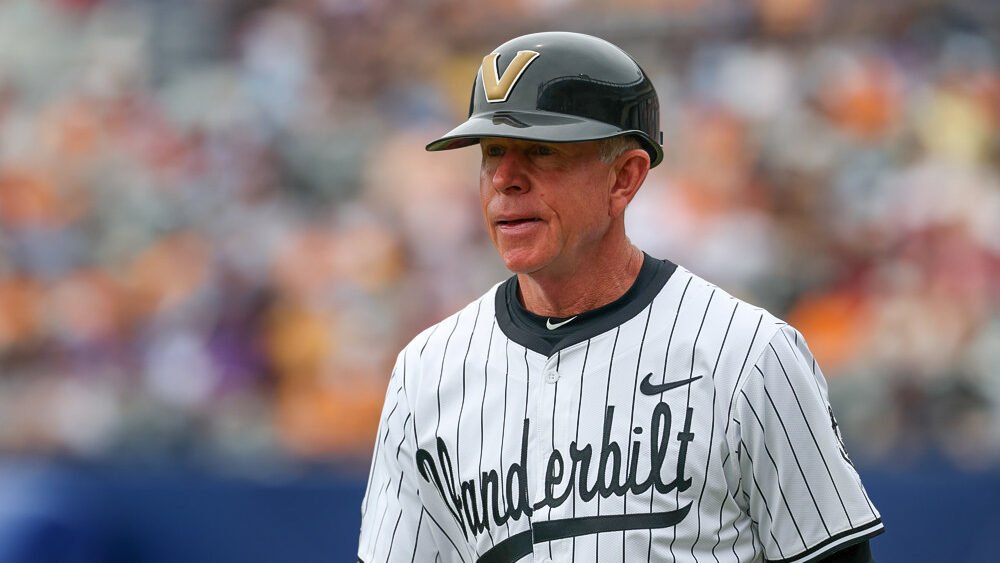
Vanderbilt’s Tim Corbin on Teaching, Development, and Why Year 24 Still Feels Great

Year 24 for Coach Tim Corbin
Yesterday, Vanderbilt Commodores Baseball Head Coach Tim Corbin stood at Hawkins Field, and addressed the media, as he is going into his 24th season leading Vanderbilt baseball. At 64 years old, he’s not slowing down. If anything, he’s leaning in harder.
“Just being out here, mentally and physically, being able to keep up and adapt,” Corbin said when asked what excites him about year 24. “It doesn’t feel like 24. It doesn’t.”
There’s something refreshing about watching Corbin talk about his longevity. He doesn’t carry it like a burden or wave it around like a badge. He treats it like it is a privilege that requires constant work to maintain. Honestly, it is a great privilege. There aren’t many that can say they have that privilege.


“If you have your health, you have everything,” he said. “And at age 64, I’m proud and happy with that. To be out here and just be able to compete with them, talk with them, stay up with them. That’s the key.”
The Age Gap That Keeps Growing (and Shrinking)
Corbin has an interesting way of thinking about time. The numbers work against him in one sense. His age goes one direction, always climbing, but that locker room? It stays the same.
“My age goes this way, but that locker room always stays the same,” he explained. “It’s always 18, 19, and 20. So that margin of difference between me and them, even though it widens, what I’m trying to do is shrink it. In age to a point where I still can do the things that they need from a coach and a leader and a mentor.”
He’s not trying to be 20 again. That’s not what he means. He’s trying to shrink the gap by staying sharp enough, engaged enough, present enough to give them what they need.
That perspective matters because it reveals something about how Corbin approaches his job. He’s not coasting on experience or reputation. He’s actively fighting to stay in the moment with his players, to understand them, to teach them. Teaching is what drives him.
“I’d rather be seen in their eyes as a teacher rather than a coach,” Corbin said. “The title means nothing to me. The teaching piece of it means everything to me because those are the actions that exist inside of the environment here.”
The College Baseball Development Argument
Dylan Tovitz of Vanderbilt Sports on SI, asked Corbin about the potential changes coming to Major League Baseball’s draft structure, the talk of shrinking it to 10 or 15 rounds, the possibility of slashing minor league levels, and you get more than an answer. You get an answer that is at heart, and a view that he believes in. It has been proven time and time again.
“I’m biased, but I need to be biased because I’m doing the same thing for a long period of time and I haven’t at any point wanted to make a move in another direction,” he said. “And that’s because I believe in education. I believe in this environment.”
He’s not just talking about Vanderbilt, either. He mentions Virginia and Texas. This is bigger than one program. That is what captures the mindset of Coach Corbin. He cares about the game as a whole. It isn’t just about Vanderbilt.
“I just feel like at 18 and 19, there’s certain consistencies that exist inside of a college environment that enhances the growth of athletic performance,” Corbin explained. “A lot of consistency here with how you’re showing up, the people in your life, the expectations of you.”
The argument he’s making is one that’s easy to miss if you’re not paying attention. College baseball gets painted sometimes as being too focused on winning at the expense of development.
“I think sometimes the college game, it’s like the college game is all about winning more so than development,” he acknowledged. “But the reality is, I would agree with that because you have to develop in order to win. And if you don’t develop, you don’t win.”
Winning is the outcome. Development is the process. You have to have them both to be a thorough winner in my opinion.
“The processes are development of the person,” he said. “I’m all about that. I’m here for it. That’s everything that I’ve ever wanted. I love teaching.”
Development has been talked about at the high school and travel levels, in different sports. People feel like that is a big money grab, and that is a topic that I will ask Coach Corbin about at a later time.
The 18-Year-Old Question
When players left early, Corbin supported their decisions, but he also knows where he stands.
“They made that choice. Do I think they’d be better off if they were here? That’s their decision,” he said. “But for me, I already know. I don’t have to answer that question. I know what’s best for young men. I feel very strongly about that, and I would talk to anyone in any room about that.”
That’s not arrogance. That comes from proof and conviction built over 24 years of watching 18-year-olds grow into men. He’s seen what the college environment can do when it works right.
The structure, consistency, and work in the classroom matters as much as the field. Recovery, taking care of your body, and learning discipline. These aren’t optional concepts to Corbin. They’re the foundation.
“If maturity grows, so does an organization, so does discipline,” he said. “And that shows up in the classroom and it shows up on the field.”
He pointed to Clark Lea’s Commodores football team as an example of what health and availability can do for performance. “The one skill that football team excelled in was health. If you stay on the field, you’ve got a chance to exceed your abilities.”
That ability falls on the hours players spend away from the field, the choices they make when no one’s watching. “Those after hours or before hours that the guys spend away from here, they’re doing a good job of that.”
What Drives Him Now
So what gets Corbin fired up for year 24? It’s pretty simple when you break it down.
“Just being out here,” he said.
Not the accolades, the history, and not even the championships, though those matter. Just being out here with the players, teaching them, watching them grow, competing with them.
“It doesn’t feel like 24. Whether it goes back to when I first started at Presbyterian College, I don’t think anything’s really changed with me in terms of my focus and what I’m looking for once I get out here,” Corbin explained. “Now I’m more experienced, but in terms of health, if you have your health, you have everything.”
There’s a clarity to that. At 64, Corbin knows exactly what matters and exactly what doesn’t. The title doesn’t matter. The teaching does. The wins matter, but only because they’re evidence of the development happening underneath.
As for the locker room? It’ll always be 18, 19, and 20. Corbin knows his job is to meet them there, to shrink that gap, to teach them what they need to know not just about baseball, but about becoming men, and 24 years in, he’s still doing exactly that.
Stay tuned to Mays Sports Media for more coverage of Vanderbilt Athletics and across the sports landscape.








Comments 3